
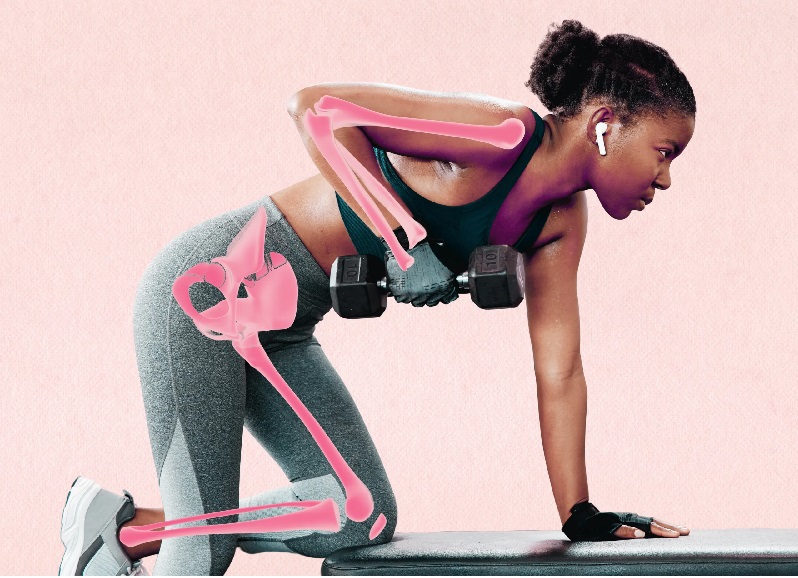
Receiving a bone density scan with the word osteopenia marked in yellow or red often triggers an immediate wave of vulnerability. Many people suddenly begin to view their bodies as delicate glass sculptures waiting to crack under ordinary physical stress. This psychological reaction creates a dangerous paradox: fearing a fracture, individuals instinctively pull back from strenuous physical activity, which inadvertently accelerates the very bone loss they hope to prevent.
Osteopenia is not a diagnosis of impending physical failure. It is an early, highly actionable warning signal. Bone is dynamic, living tissue that constantly breaks down, repairs, and remodels itself in direct response to the mechanical forces placed upon it. While a diagnosis means your bone mineral density has slipped below peak youthful averages, the underlying architectural framework of your skeleton is still largely intact. This makes the osteopenia stage the most opportune window of your adult life to intervene, apply targeted physical loads, and rebuild a resilient skeletal structure.
Understanding the Biological Opportunity of Osteopenia
To approach bone health with confidence, you have to understand what your diagnostic score actually represents. Bone density is primarily evaluated using a dual-energy X-ray absorptiometry scan, which assigns a T-score comparing your bone mineral density to that of a healthy young adult. A normal T-score sits at negative 1.0 or higher. Full osteoporosis begins at negative 2.5 or lower. The zone between negative 1.0 and negative 2.5 is classified as osteopenia.
Inside your bones, a continuous cellular conversation takes place between two specialized cell types: osteoclasts, which dissolve and clear away aged or damaged bone tissue, and osteoblasts, which lay down a fresh protein matrix and coat it with crystalline minerals.
Throughout early adulthood, these processes remain in near-perfect equilibrium. Beginning around your mid-thirties, and accelerating sharply during hormonal shifts such as menopause, osteoclast activity naturally begins to outpace osteoblast formation. However, osteoblasts retain their ability to build new bone matrix well into old age if they receive the proper physiological command. That command arrives in the form of mechanical strain.
The Mechanics of Skeletal Adaptation: Wolff’s Law
Over a century ago, German anatomist Julius Wolff observed that bone adapts and remodels in direct response to the demands placed upon it. Known as Wolff’s Law, this biological rule dictates that when bones experience physical stress, bending, or compression, internal electrical and fluid shifts occur within the microscopic channels of the bone tissue.
These mechanical shifts stimulate specialized mechanosensory cells called osteocytes. When an osteocyte detects physical deformation beyond its habitual threshold, it triggers a cascade of biochemical signals that summon osteoblasts to reinforce that specific area with denser mineral deposits.
This mechanism reveals why standard low-impact aerobic exercise often falls short for bone health. Activities like swimming, casual cycling, and gentle water aerobics offer cardiovascular and metabolic benefits, but they do not place significant compressive loads on the skeleton. Water supports your body weight, and cycling removes impact from the hips and spine. To stimulate bone mineral accumulation, the skeleton must experience gravity and external resistance that challenge its habitual baseline.
Progressive Resistance Training: The Foundation of Bone Density
Resistance training is the most powerful tool available for reversing bone loss. When a muscle contracts against a load, the tendon pulls forcefully on its bony insertion point, delivering a localized osteogenic stimulus. Furthermore, holding weights compresses the spine and hips, signaling the central axial skeleton to adapt.
Prioritizing Multi-Joint Compound Movements
Bones do not build density through isolated, single-joint movements like bicep curls or seated calf raises. Instead, you must prioritize multi-joint compound exercises that transmit load across the hips and spine, which are the most clinically significant fracture sites.
-
The Hip Hinge: Movements such as the Romanian deadlift or kettlebell deadlift strengthen the posterior chain—hamstrings, glutes, and spinal erectors—while directly loading the femoral neck and lumbar vertebrae.
-
The Squat Pattern: Goblet squats, box squats, and standard barbell squats deliver axial loading through the spine and pelvis while developing the leg drive necessary to prevent falls.
-
The Overhead and Horizontal Press: Dumbbell overhead presses and push-ups generate compressive forces through the wrists, arms, and thoracic cage, reinforcing the upper body.
-
Loaded Carries: Walking with moderate weights held at your sides, commonly known as a farmer’s carry, challenges postural endurance and forces the hip abductors and pelvic girdle to stabilize under load.
Finding the Correct Training Intensity
Lifting miniature, five-pound dumbbells for thirty repetitions builds muscular endurance, but it does not trigger bone remodeling. To provoke osteogenesis, the skeleton requires a stimulus that feels challenging.
Focus on working within a range of eight to twelve repetitions per set, selecting a resistance where the final two repetitions require meaningful effort while allowing you to maintain strict, flawless form. Rushing into excessively heavy weights with poor posture increases injury risk, but staying permanently within your comfort zone fails to produce skeletal adaptation. Progress your weights gradually over weeks and months as your movement quality solidifies.
Adding Controlled Dynamic Impact and Balance Work
Mechanical load is not determined solely by how heavy an object is; it is also determined by how rapidly the load is applied, a concept known as strain rate. Bones respond with particular enthusiasm to brisk, varied, dynamic impact.
Controlled Ground Reaction Forces
If your joints and current bone density allow, incorporating short bursts of impact training delivers a unique osteogenic signal that strength training alone cannot replicate.
Simple, accessible impact drills include:
-
Deliberate Stomping: Stomping firmly into the ground with alternating feet as if squashing an empty can.
-
Heel Drops: Rising up onto your toes and allowing your heels to drop firmly to the floor with a straight, but unlocked, knee.
-
Step-Downs: Stepping off a low aerobic step or bottom stair and landing solidly on both feet to absorb the ground reaction force.
-
Brisk Incline or Downhill Walking: Navigating varied outdoor terrain introduces multi-directional impact forces that awaken dormant bone regions.
Keep impact sessions brief. A dozen deliberate stomps or a few minutes of varied footwork done consistently three to four days per week provide plenty of stimulus without wearing down joint cartilage.
Proprioception to Eliminate Fracture Risk
Bone density numbers only tell part of the story. A bone that never encounters a fall rarely breaks. Therefore, dedicated balance and coordination training is just as crucial as lifting weights.
Incorporate daily balance drills into normal household routines:
-
Practice standing on one foot for thirty seconds while brewing morning coffee.
-
Perform heel-to-toe tandem walks down a narrow hallway.
-
Work on lateral weight shifts and single-leg balance with eyes closed or while slowly turning your head from side to side.
Enhancing your body’s unconscious awareness of its position in space dramatically lowers the likelihood of accidental trips and slips.
Movements to Modify: Protecting Vulnerable Structures
While progressive loading strengthens bone over time, people with osteopenia must avoid certain movement patterns that place uneven, dangerous shear forces on the skeletal system.
The most vulnerable area is the anterior aspect of the thoracic and lumbar spine. Compressive loading—force directed straight down the vertical column of the spine—makes vertebrae stronger. In contrast, loaded spinal flexion, which occurs when you round your back forward while carrying weight, concentrates extreme compressive stress onto the front edges of the vertebral bodies, increasing the risk of wedge fractures.
To safeguard your spine:
-
Eliminate traditional sit-ups, crunches, and toe touches that force the back into rounded, slumped positions. Replace them with neutral-spine core stabilizers like planks, bird-dogs, and Pallof presses.
-
Avoid end-range rotational twisting under speed or load. When turning or pivoting, move your hips and feet together rather than wringing out your lumbar spine.
-
Modify deep forward bends in yoga or stretching routines by hinging exclusively at the hips while keeping your spine long and chest open.
The Nutritional Scaffolding Required for Mineralization
Lifting weights and stomping on the pavement issues the architectural command to build bone, but your body cannot construct a cathedral without bricks and mortar. Nutrition provides the raw building blocks required to mineralize that newly stimulated matrix.
Protein as the Structural Matrix
Many people assume bone is purely mineral, like chalk or limestone. In reality, roughly fifty percent of bone volume is made of a flexible, dense protein scaffold composed primarily of collagen. Minerals like calcium and phosphorus crystalize on top of this collagen lattice to create strength.
If your daily protein intake is inadequate, your body cannot maintain this structural mesh. Ensure that every meal contains high-quality protein from whole food sources such as fish, poultry, eggs, tofu, Greek yogurt, or legumes to provide the amino acids necessary for collagen production.
The Micronutrient Network
Bone health requires a synchronized team of micronutrients working together rather than an isolated mega-dose of a single supplement:
-
Calcium: The primary structural mineral. Focus on dietary sources like leafy dark greens, canned bone-in fish, dairy products, and fortified plant milks.
-
Vitamin D3: Acts as the hormonal gatekeeper, signaling your intestines to absorb calcium from your food into the bloodstream.
-
Vitamin K2: Activates osteocalcin, an essential protein that attracts calcium out of the bloodstream and binds it directly into the bone matrix, preventing it from depositing into your arterial walls.
-
Magnesium: Converts Vitamin D into its biologically active form and maintains the physical crystalline structure of bone tissue.
Designing a Sustainable Weekly Framework
A safe, highly effective bone-building protocol does not require hours in the gym every day. Consistency and recovery far outweigh sheer volume.
A balanced weekly structure might look like this:
-
Two to Three Days of Resistance Training: Forty-five minutes focusing on hip hinges, squats, upper-body pressing, rowing, and loaded carries, separated by at least one rest day.
-
Three to Four Days of Aerobic and Impact Movement: Thirty minutes of brisk outdoor walking, interspersed with brief sets of heel drops or firm stomps.
-
Daily Integration: Five minutes of balance drills and neutral-spine core activation woven into your ordinary morning or evening routine.
Building Resilience for the Long Haul
Skeletal remodeling is a deliberate biological process. While muscle tissue can adapt and grow stronger in a matter of weeks, bone turnover cycles take several months to unfold. It often takes one to two full years of consistent loading to produce measurable improvements on a follow-up bone density scan.
Approach this journey with patience and self-assurance. Having osteopenia does not mean your active years are behind you; rather, it provides a clear, biological prompt to upgrade your physical capacity. By honoring your biomechanics, choosing progressive loads over passive hesitation, and providing your body with the nutrients it requires, you can transform an initial diagnosis into the beginning of your strongest, most resilient physical chapter.